Rogue Access Point Detection
A rogue access point is any wireless access point in your environment that you never authorized. It could be a consumer router someone plugged into a wall port, a device left behind after a project, or an access point an attacker placed. Because it bypasses your normal controls, it can expose internal systems to anyone in wireless range, sidestepping firewalls, network access control, and physical security.
Rogue access points vs. evil twins
A rogue access point is simply one that is unauthorized. An evil twin is a targeted attack where an access point impersonates one of your legitimate networks to trick clients into connecting. Every evil twin is a rogue access point, but not vice versa. Nzyme detects both. Evil-Twin Detection covers impersonation of your known SSIDs, while this page covers unauthorized access points in general.
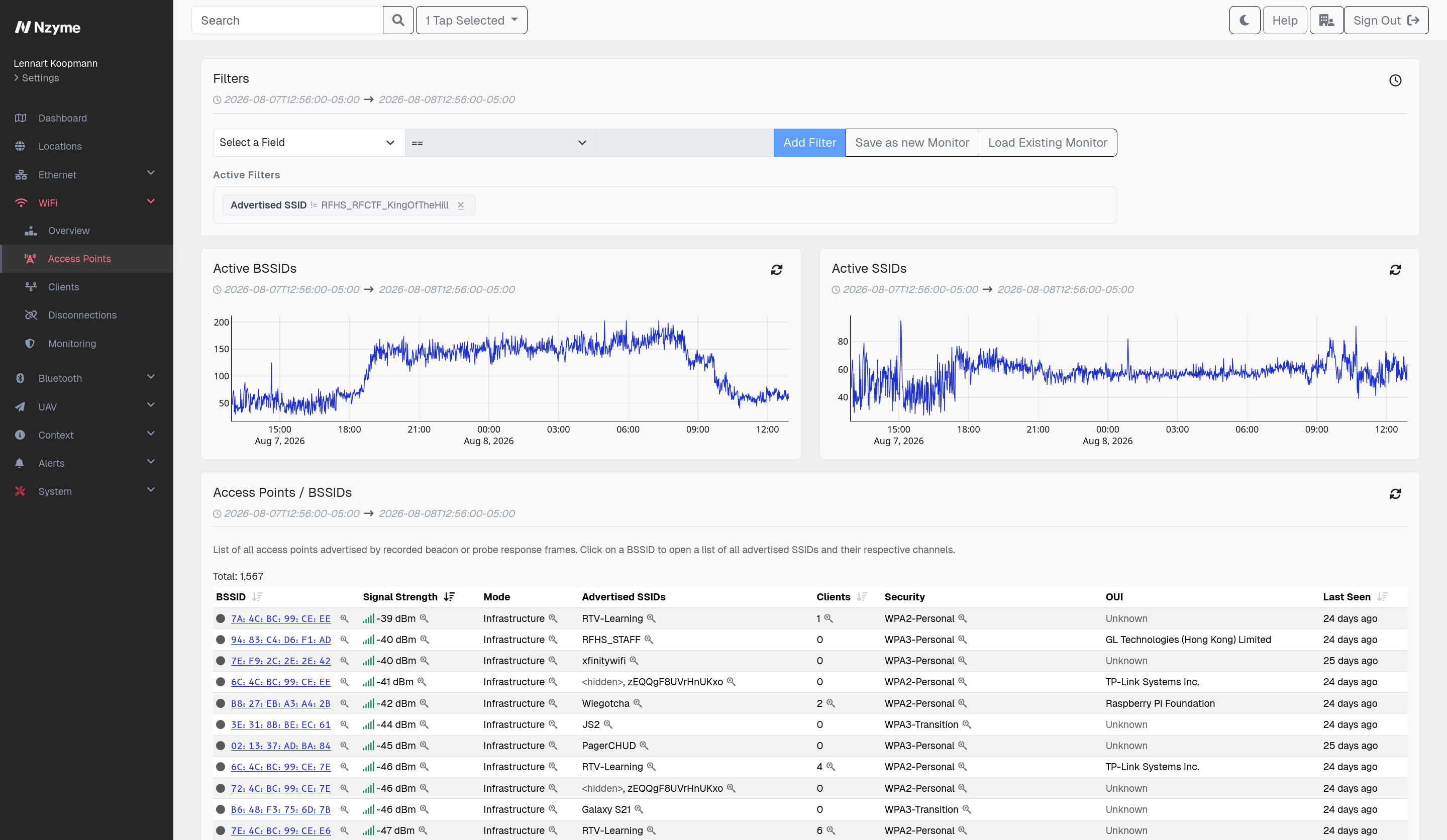
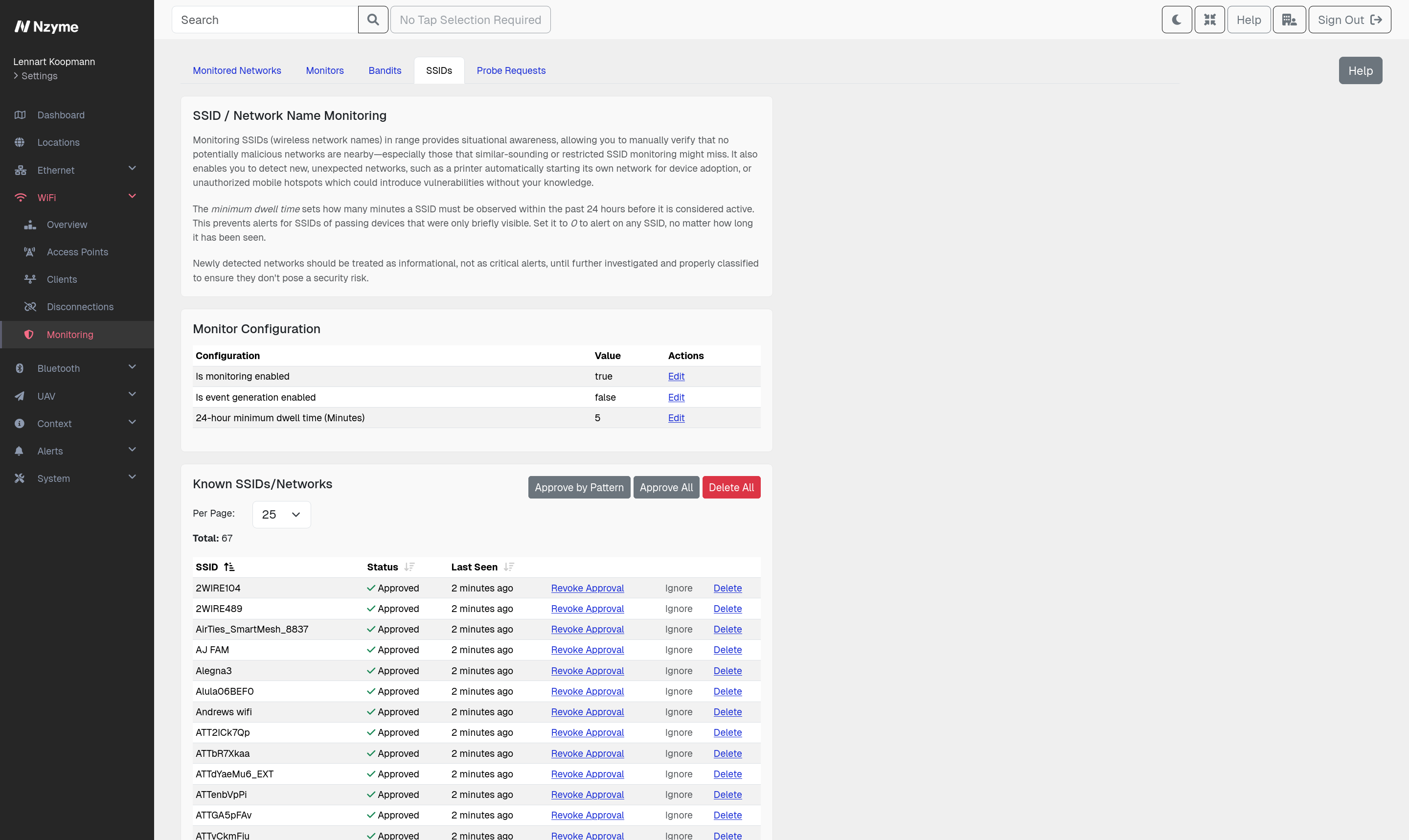
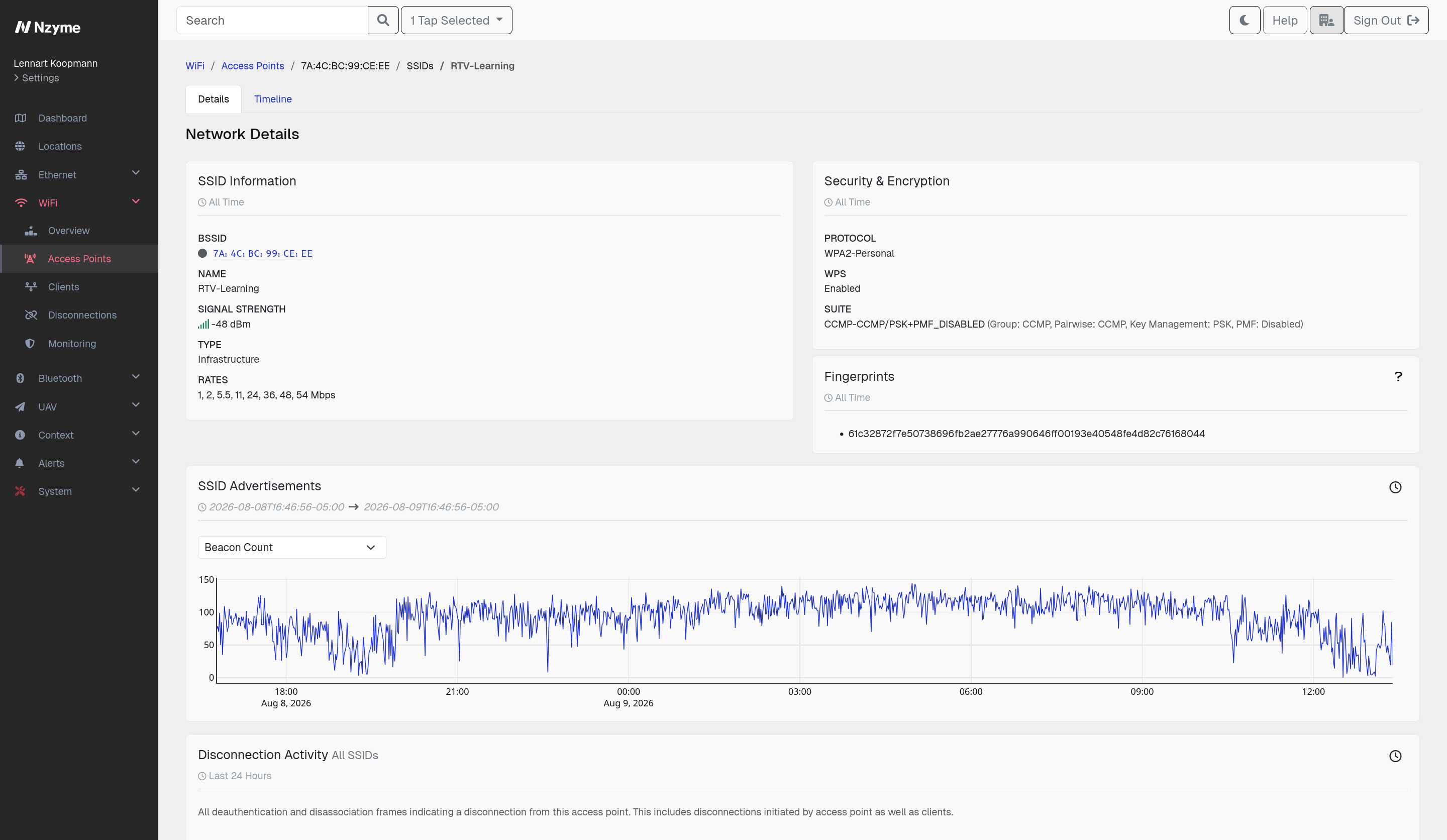
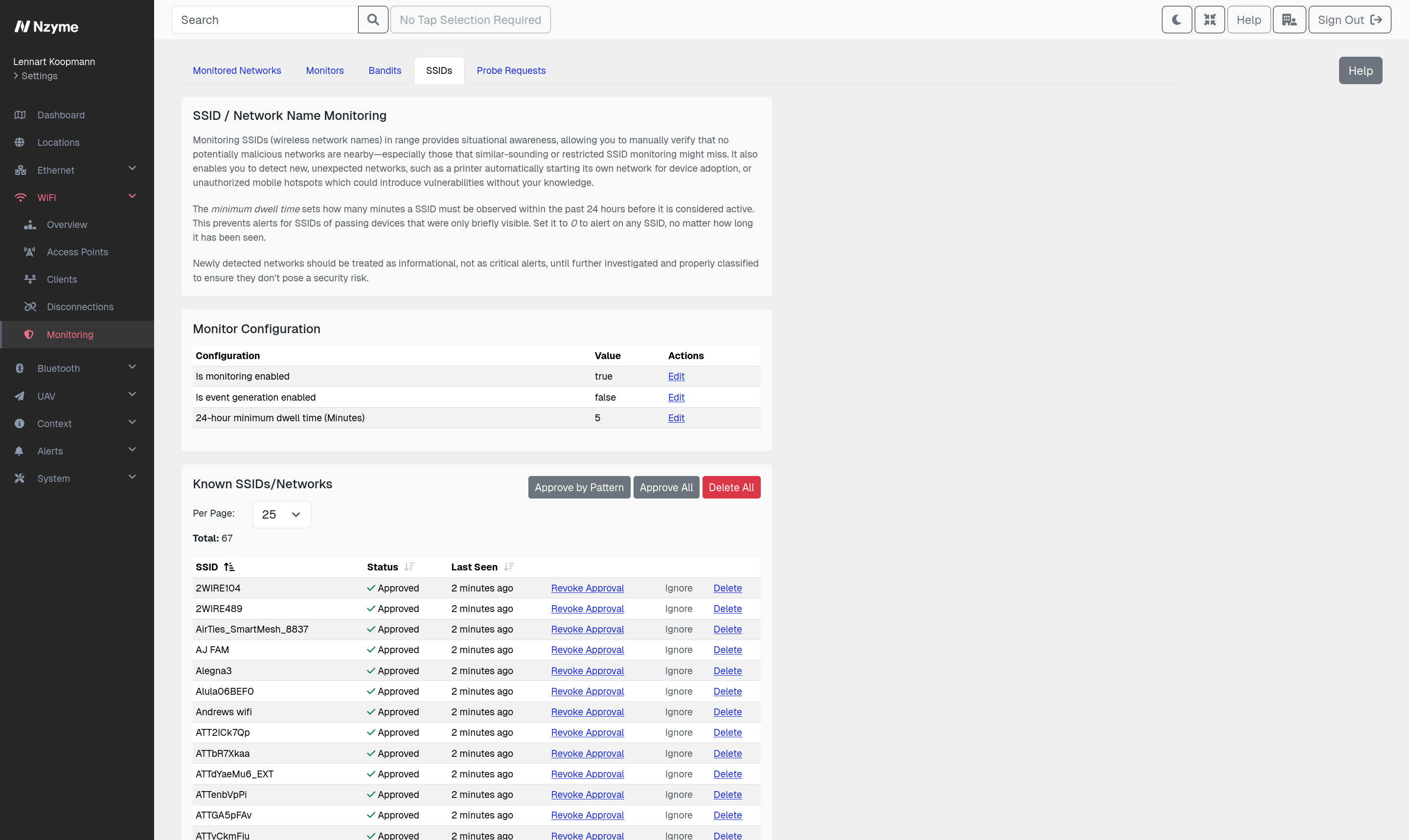
Reviewing detected access points, and approving known networks so anything new stands out.
How Nzyme detects them
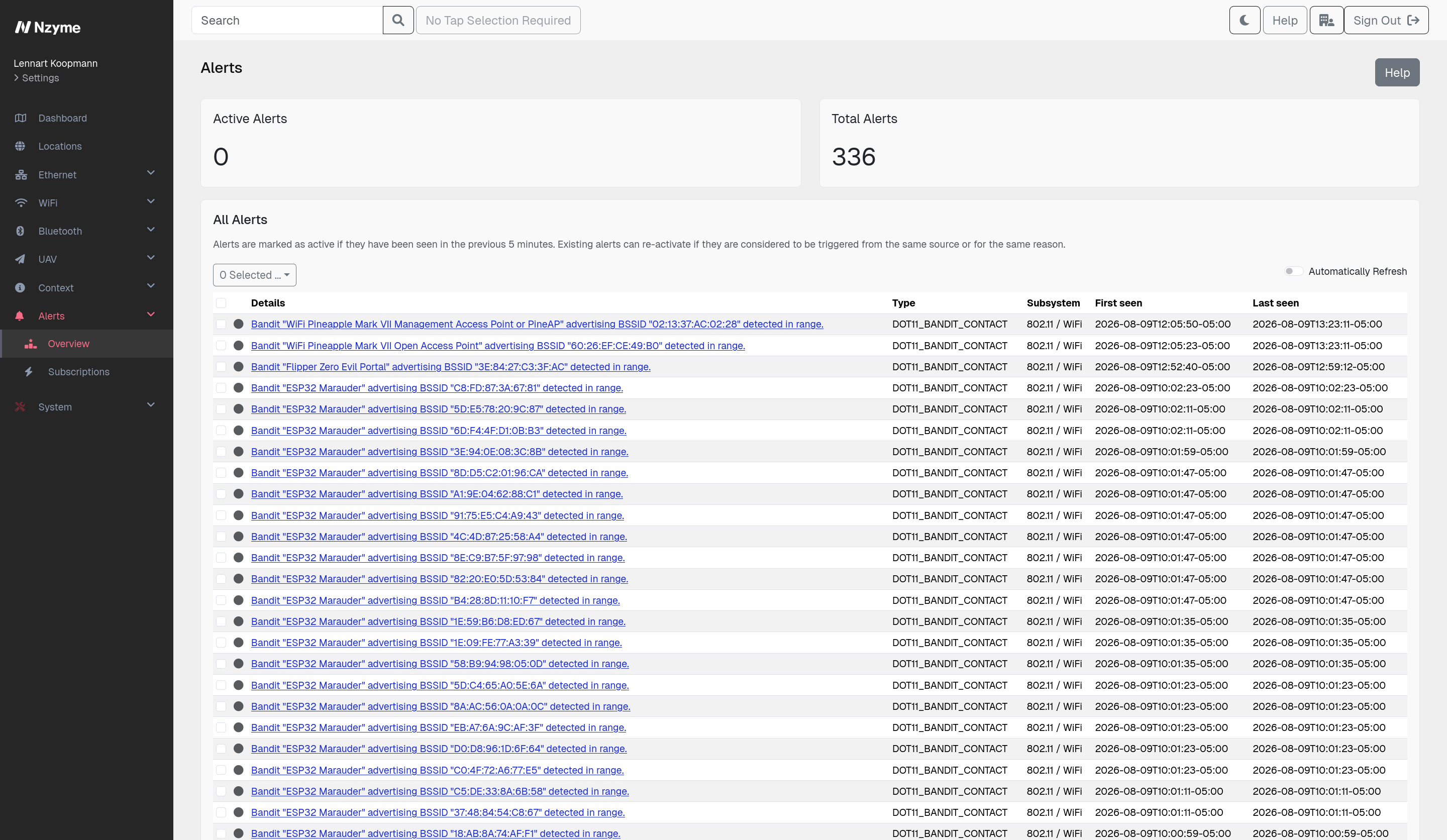
Nzyme’s sensors watch the wireless spectrum around your locations and record every access point and SSID they see. You approve the networks that belong, and Nzyme surfaces and alerts on the rest.
- Confirms whether an access point is on your network. Access Point Correlation compares what Nzyme sees in the air with what it sees on the wire, so you can tell a real intrusion from a harmless neighbor.
- Reviews and approves each new SSID. Approve the networks that belong and flag the rest. Noise from passing networks, like an access point in a car driving by, is filtered out automatically. Works alongside Network Monitoring.
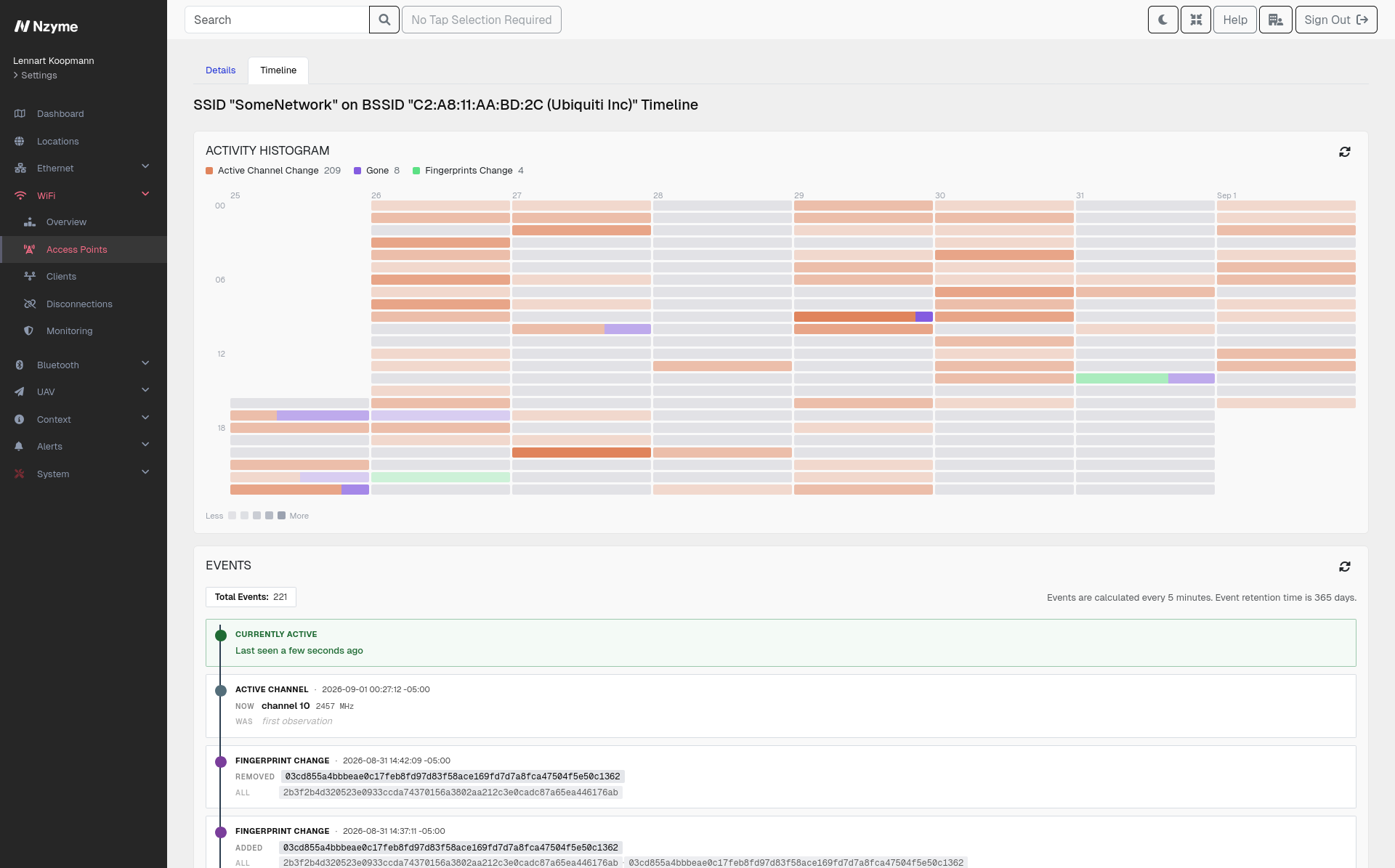
- Keeps a full history of every SSID. Nzyme records every network it detects with SSID Monitoring, with the analytics to tell a legitimate one from a suspicious one.
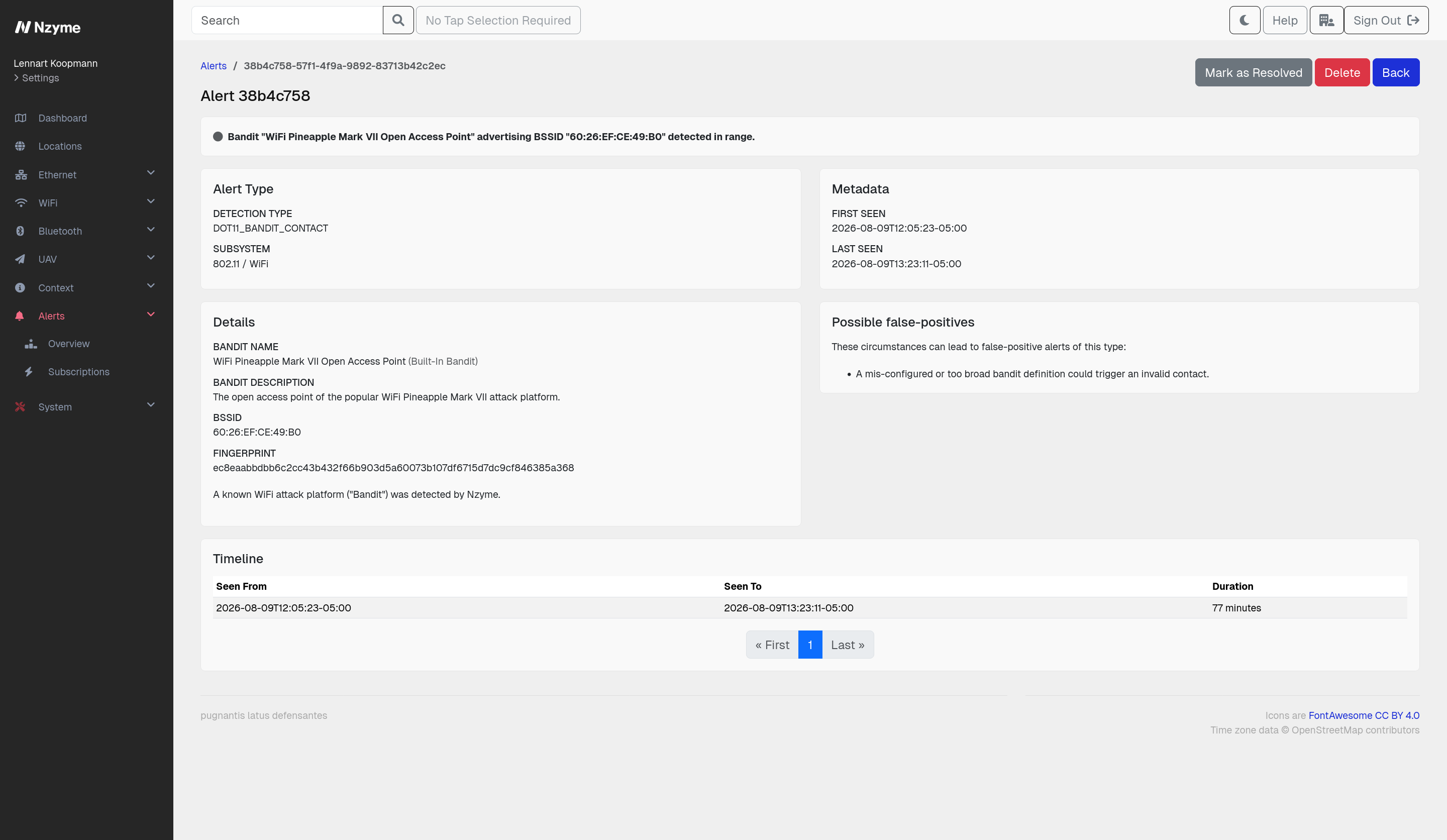
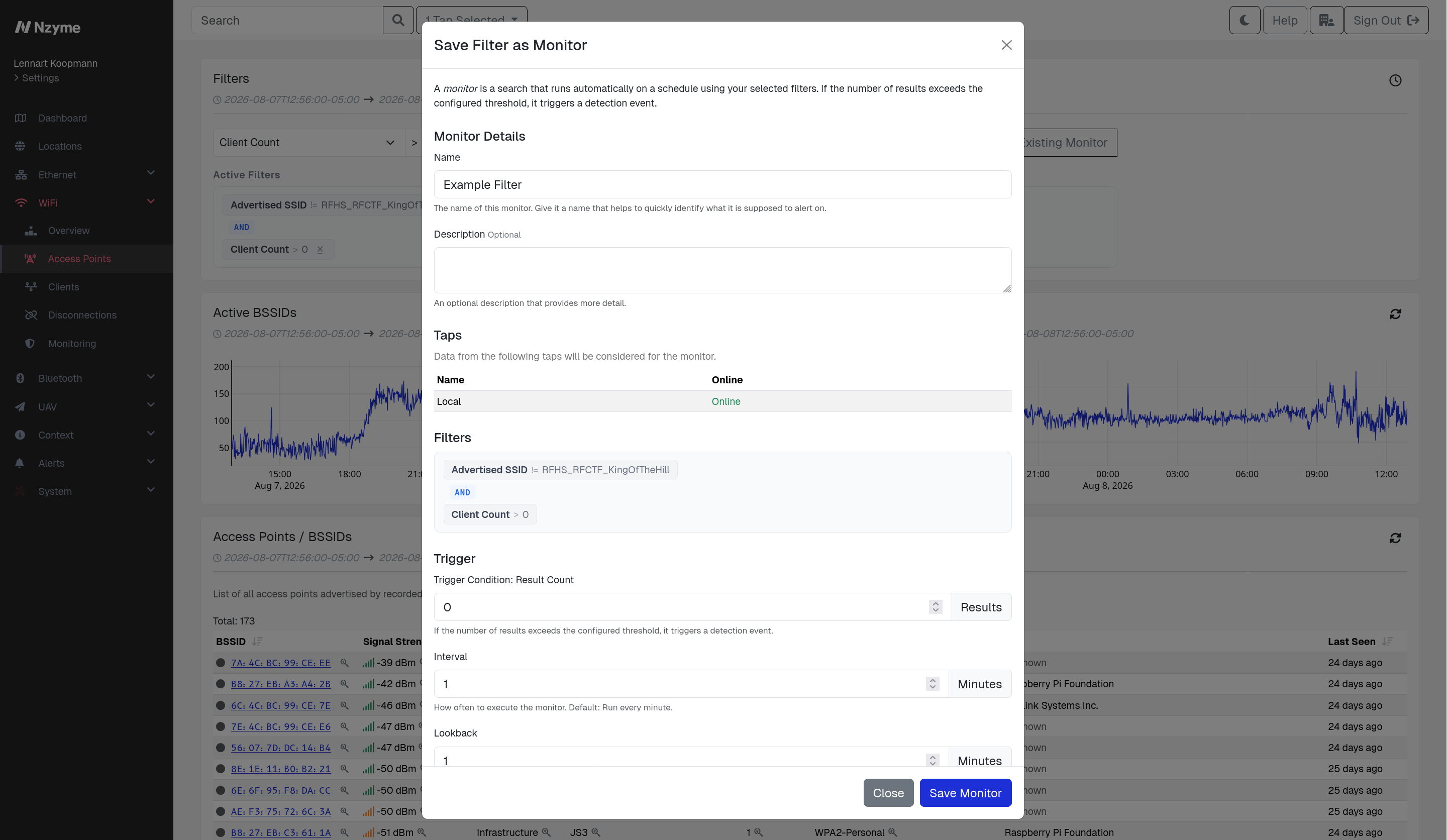
- Alerts on look-alike SSIDs. Nzyme flags networks with names that resemble your legitimate SSIDs with Monitors.
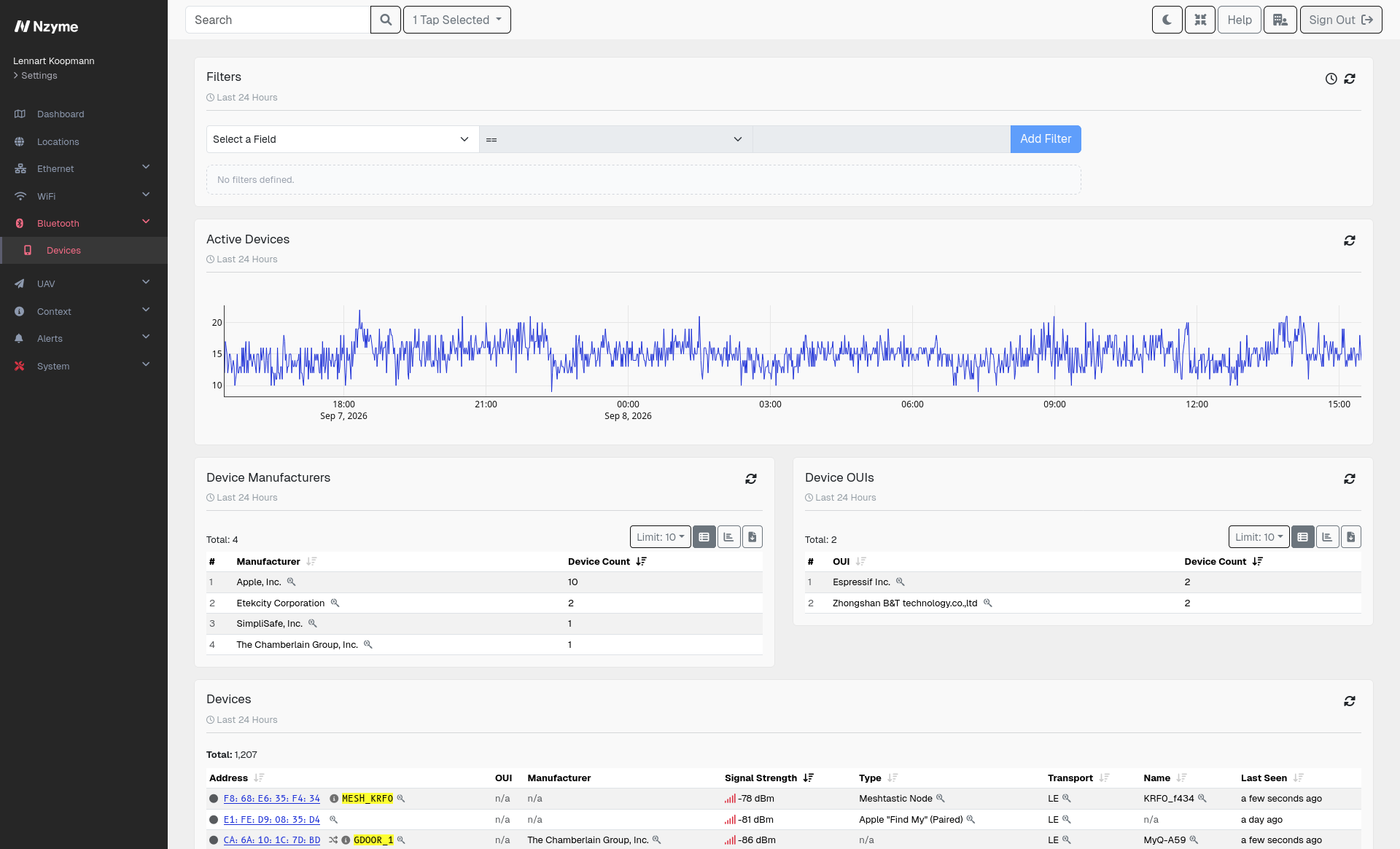
- Catches clients connecting to rogue access points. When one of your devices joins an unknown access point, Nzyme surfaces it before it becomes a foothold.
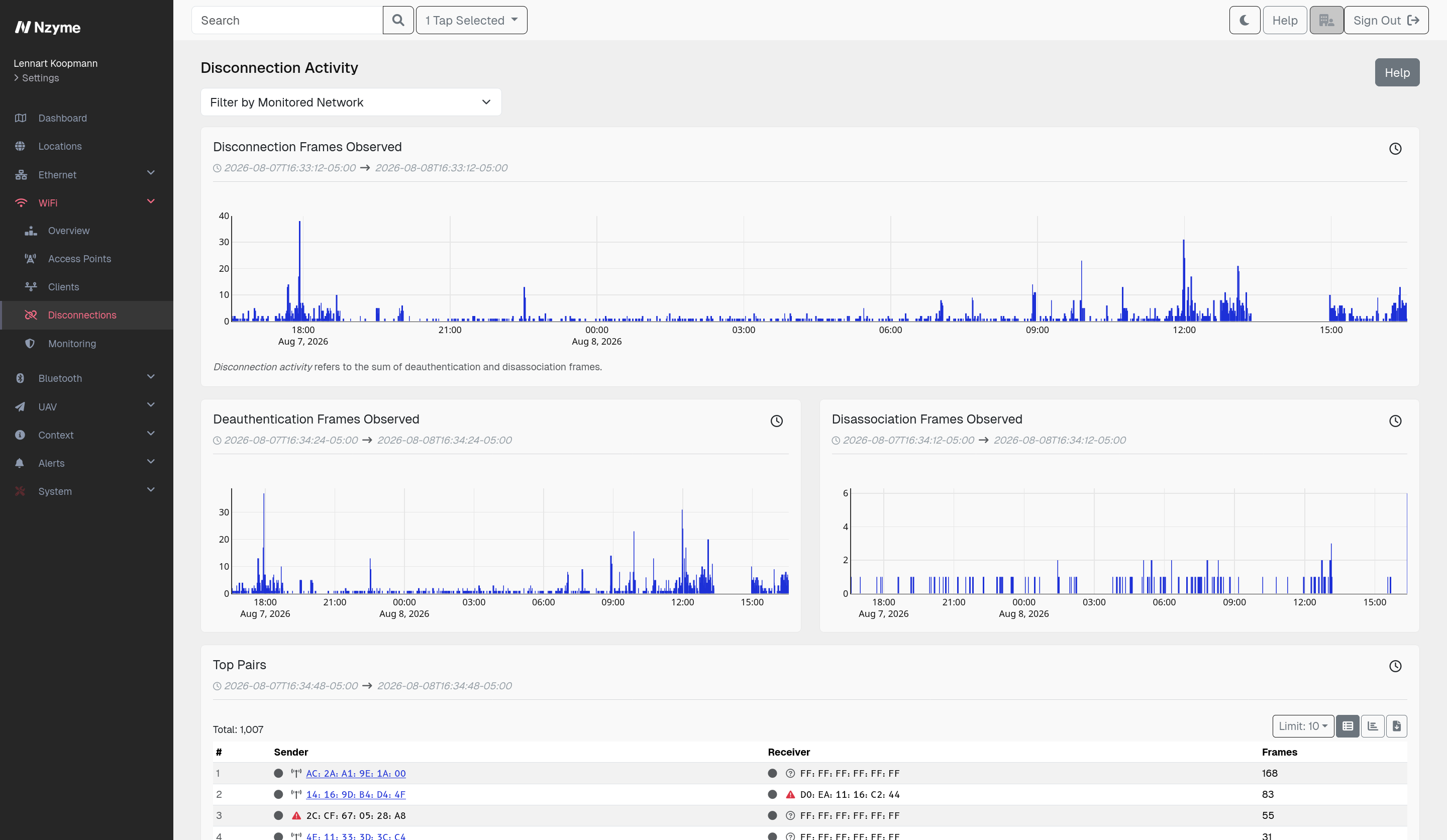
- Helps you locate the access point. Trilateration across multiple sensors estimates where an access point physically is.